
The silence in their apartment was heavy, packed with twenty years of things they hadn’t said. Emi and Kenji moved around it like two practiced dancers, their choreography perfected by routine. He would read the newspaper at the small kitchen table; she would pour his genmaicha, the roasted aroma a familiar ghost between them. They slept on separate futons, rolled out each night on opposite sides of the tatami room, two parallel lines that would never intersect.
It was a life built on a truce, a quiet armistice signed two decades ago. When he had first told her, that younger Kenji with fear-bright eyes, he had wept. He had shown her the clothes, the makeup, a hidden, softer version of himself. And she, a young bride terrified of the unknown, had made him choose. “Me, or that?”
He had chosen her. He had burned the dresses in a small metal bin on their balcony, the smoke acrid and mournful. He had promised.
Their marriage, stripped of passion, had settled into a kind of gentle companionship. They were partners in weathering the quiet disappointment of a childless home, roommates who shared a surname and a mortgage. Emi had learned to find comfort in its predictability. The silence was a blanket she had knit herself, stitch by careful stitch.
Then, the first thread pulled loose. It was the scent of cherry blossom, faint and floral, on his collar when he came home late from the office. It wasn’t her perfume. It wasn’t the scent of another woman, either; it was too delicate, too personal. A week later, she found a tiny, clear bottle of top-coat nail polish tucked into the back of his sock drawer. Her heart hammered against her ribs, a frantic bird in a cage.
She said nothing. She watched him. She saw how his gaze lingered on the vibrant silks in a shop window. She noticed the new, meticulous care he took in shaving his forearms, the skin left impossibly smooth. These were small things, almost invisible, but to Emi, they were seismic tremors before the earthquake.
The confrontation came on a rainy Tuesday. She had been folding laundry, the scent of fresh cotton a comfort, when she saw it. He was in the bathroom, the door slightly ajar. He thought she was still at the market. He stood before the mirror, but his posture was different—softer, his shoulders curved in. With a pair of her tweezers, he patiently, artfully, shaped his eyebrows.
The sight stole the air from her lungs. It wasn’t the act itself, but the look on his face in the reflection. His quiet, profound concentration. A look of homecoming. He hadn’t worn that expression for her in twenty years.
She pushed the door open. The tweezers clattered into the sink.
Kenji’s reflection crumpled. The mask of the stoic husband fell away, and behind it was the same terrified, hopeful person she had met all those years ago.
“Emi,” he whispered.
She held up the bottle of polish she’d retrieved from his drawer. Her hand shook. “You promised,” she said, her voice a thin, frayed wire. It was the only thing she could say. You promised. It held all the weight of their silent years, their childless bed, her carefully constructed peace.
He turned from the mirror to face her. He didn’t try to lie. The exhaustion on his face cut bone-deep. “I can’t anymore,” he said, his voice cracking. “I’m…drowning, Emi. Every day, I wake up and I drown a little more.”
He wasn’t asking for forgiveness. He was stating a fact. The truce was over. The war was lost, or won, depending on which side you were on.
“So what now?” she asked, the words hollow in the small, tiled room. “You will wear dresses? You will become…?” She couldn’t finish the sentence.
He took a slow, deep breath, and for the first time, his shoulders straightened—not with masculine resolve—but with a different kind of strength. A fragile, terrifying self-acceptance.
“I will become myself,” he said softly. “I hope…my name will be Akiko.”
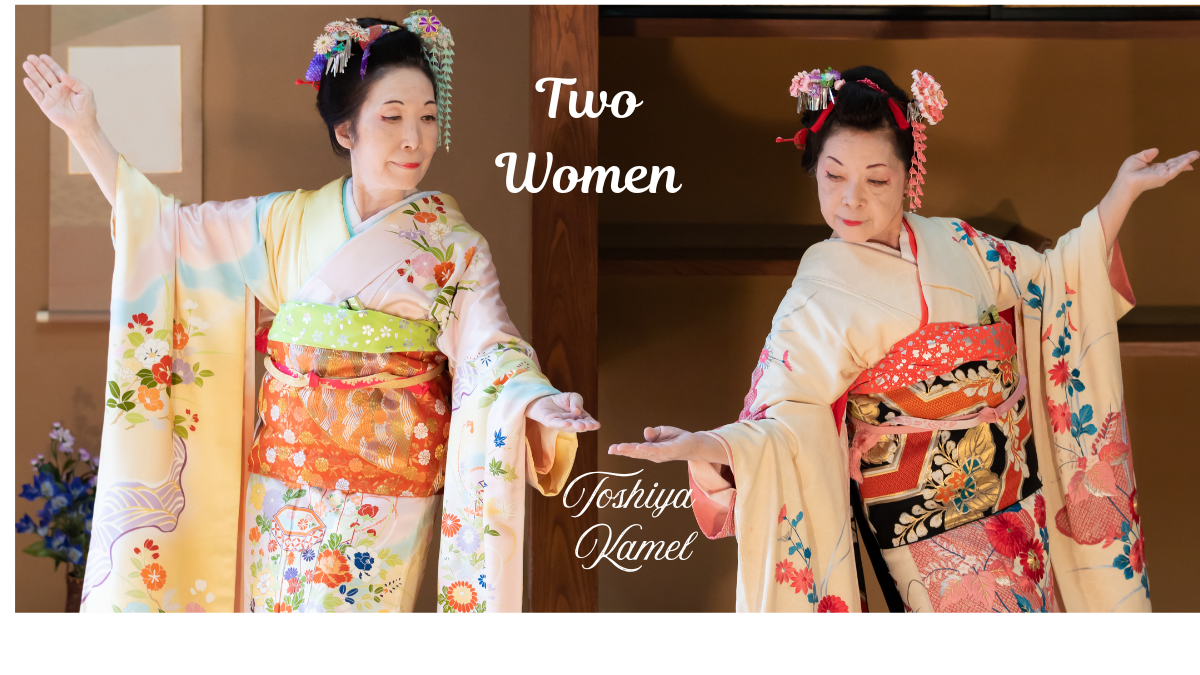
Akiko. The name hung in the air between them, a beautiful, impossible thing. It crowded out Kenji, pushed him from the room, from their marriage, from her life. Emi glanced at the person standing before her, a stranger in her husband’s skin, and then at her own reflection in the mirror behind him. She saw a middle-aged woman with tired eyes and a life that had just been declared a tragic lie. There were two women in the bathroom now, and one of them was utterly, completely alone.
Toshiya Kamei (she/they) takes inspiration from fairy tales, folklore, and mythology.
Comment